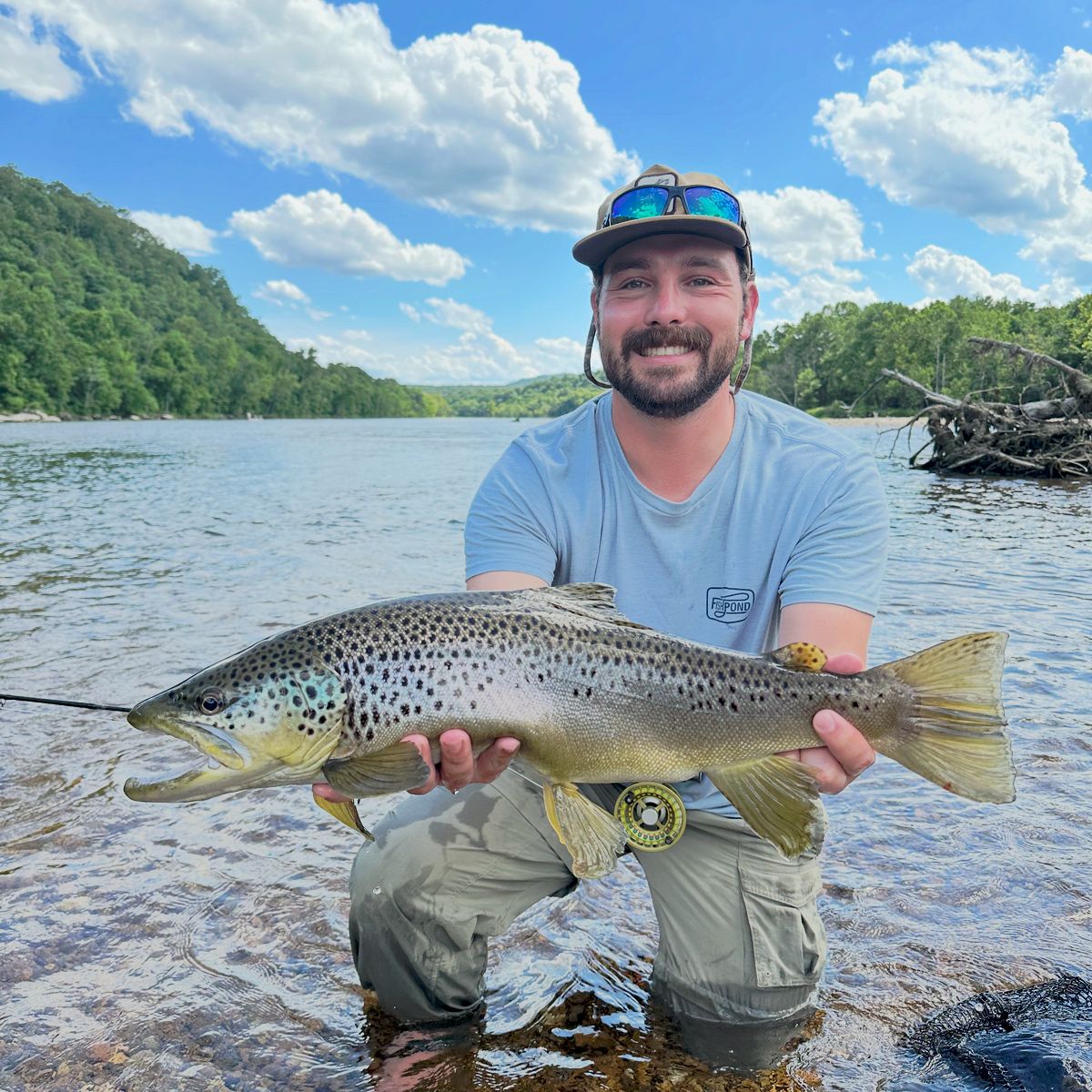


Last week, we shared an update on one of our favorite Ozark creatures: the Neosho bass.
It was an encouraging update backed by a lot of science and genetics. Turns out, pure strains of the Ozarks' native fish species are holding stronger than we thought.
But their numbers are still low and hybridization is still a threat.
It begs the question: Why don't we just use hatcheries to breed a bunch of genetically pure Neosho bass and restock them back to ideal numbers?
This week's guests, Jeremy Risley and Eric Naas from AGFC, make a pretty convincing case for why that's the wrong instinct.
In this week's edition:
What decades of well-meaning stocking did to our waterways
Why hatcheries are useless if you get this one thing wrong
How all this new research may shape regulations.
Let's get to it.
— Kyle Plunkett

The Interview

Neosho Bass Will Change Ozark Smallmouth Fishing Forever (Here’s How)
🎧 If you like platforms other than YouTube, find The Ozark Podcast on Apple, Spotify, and all the rest.

What Stood Out
You ever try to help a friend only to realize later you made the problem way worse?
That's kind of what happened in Arkansas back in the early 1900s. Bass numbers were low, and people needed fish to eat. So the state started collecting brood stock from rivers like the Kings and spreading fingerlings into streams all over the region. The idea was simple: If we put more fish in the water, we feed hungry families.
Problem solved, right?
Unfortunately, it created a whole new problem.
At the time, they didn't have the genetic understanding to know these were actually different fish. So decades of that well-meaning work created the hybridization problem we're dealing with today. Kings River smallmouth pushed into Neosho drainage. White River genetics ended up in places they'd never been.
The one bass species found only in the Ozarks was being bred out of existence, and nobody even knew it was happening.
So how do we get out of this?
Kyle and I have been down this rabbit trail more than once. Half the time we start talking about the Neosho, we end up at the same place: somebody should build a hatchery. Get some funding, raise fish, fix it.
But Eric Naas said something that stopped that reframed the whole conversation.
"You can't stock your way out of bad habitat."
A healthy stream's natural reproductive capacity will outproduce anything a hatchery could. The fish that belong here are already rejecting outside genetics and holding their ground. Mother nature is doing her job. But only where the habitat lets her.
Hybridization is one problem. Habitat is another.
Stream banks eroding and dumping sediment.
Rivers getting wider and shallower.
Water temperatures creeping up.
That hole you fished as a kid that was chest-deep and full of fish? It's ankle-deep now. And it happened so slowly we hardly noticed.
Read on for what you can actually do about all of this...


Members of The Holler save hundreds on outdoor gear from our partner outfitters. Including everyday discounts like:
20% off all Moultrie Products
10% off Big Pete's Taxidermy
10% off Diamond State Fly Co.
And more…
Plus, exclusive content each month and access to our community conversations.

Steal These Tactics
A few things from this conversation that you can actually act on. No biology degree required.
1. Watch for AGFC's open call for angler input
If you've ever said "I wish Game and Fish would actually listen to anglers", they heard you.
Jeremy announced on the show that AGFC is cutting their current stream smallmouth bass plan short and starting a full revision this year. And they're not doing it the old way: writing a plan behind closed doors and asking for public comment after the fact.
They're building the plan around angler input. So keep an eye on the AGFC website and social channels for when the surveys drop.
2. Look at the banks, not just the water.
Next time you're on the water, look at the banks.
Jeremy made a point that changed how I'll see every stream from now on. The biggest driver of decline in stream smallmouth populations is habitat degradation, not fishing pressure. Specifically, stream bank erosion.
Is the stream wider and shallower than it used to be?
Are they sloughing off and dumping sediment into the stream?
Are there stretches with no shade and water that feels like bathwater?
Those observations are what you bring to the stakeholder surveys.
3. Connect with groups like the Arkansas Smallmouth Bass Alliance.
Jeremy and Eric both gave a huge shout-out to Keith Reeves and the Arkansas Smallmouth Bass Alliance.
These guys are actively partnering with AGFC by providing on-the-water observations that biologists don't always have time to gather themselves. Eric said working with the Alliance has been the best part of his two years in Arkansas.
Joining groups like this adds real life input to the folks gathering scientific data that affects policy.

PROVISIONS


Ozark Camo Hat

Neosho Bass Hat

Camp Mug

Keep an eye out for upcoming episode with Roy Pilgrim. If that name doesn’t ring a bell yet, it will.
Till then, get outside.
— Kyle Plunkett